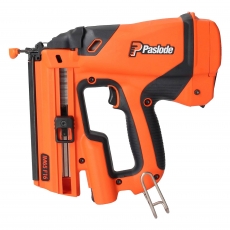
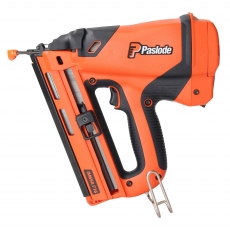
PASLODE IM65/F16 Li-Ion Impulse Gas Brad Nailer
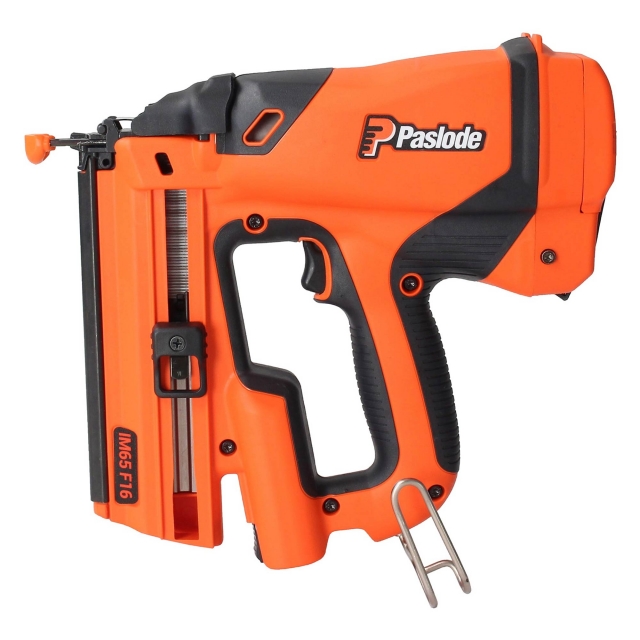
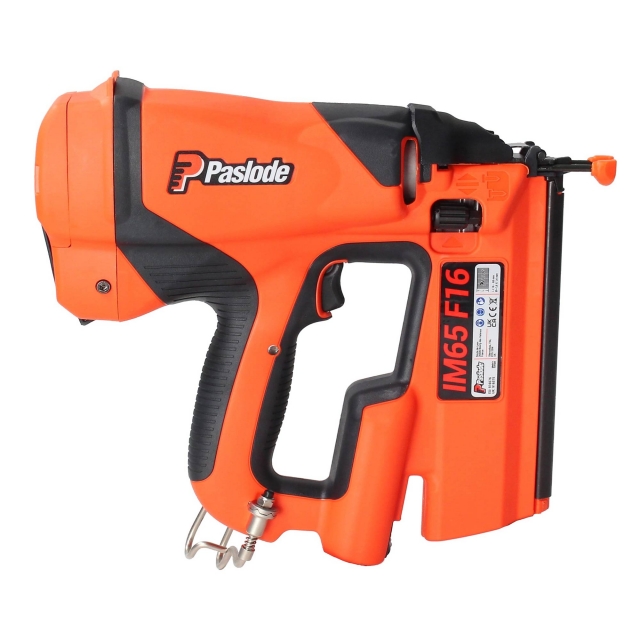
PASLODE IM65/F16 Li-Ion Impulse Gas Brad Nailer
 FREE DELIVERY AVAILABLE*
 In stock





Why Not Add

VAT (£32.39 ex VAT)

VAT (£19.23 ex VAT)

VAT (£26.51 ex VAT)
VAT (£2.50 ex VAT)
What’s Included
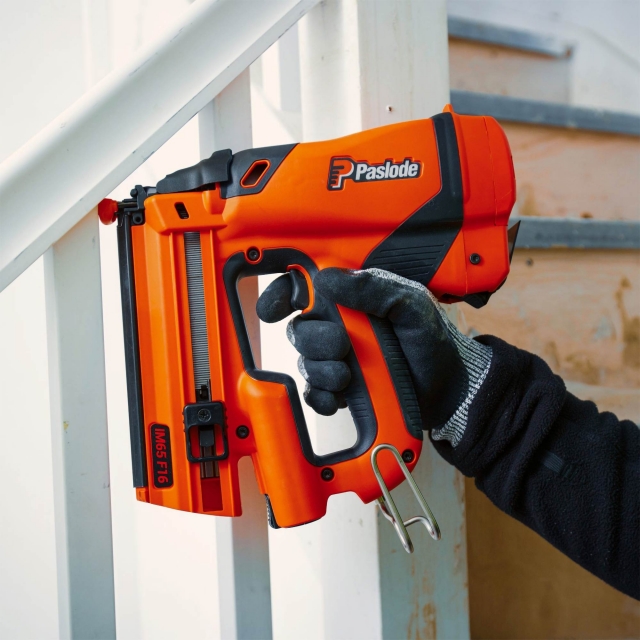
- Paslode IM65 Cordless Gas Finish Nailer
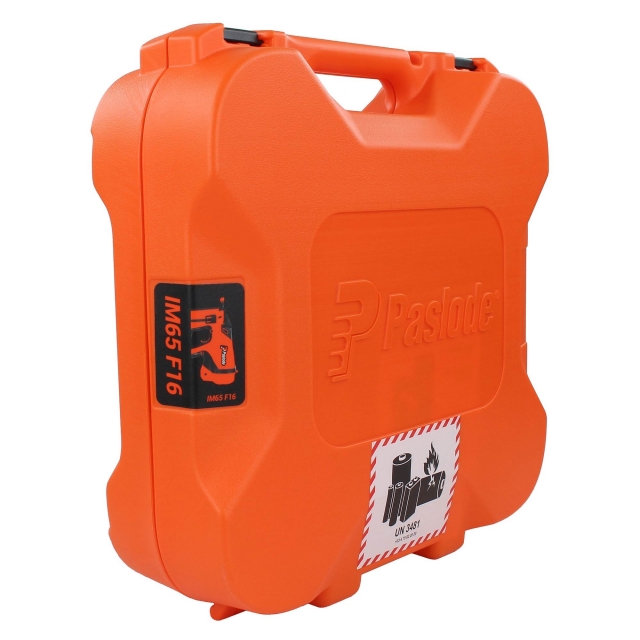
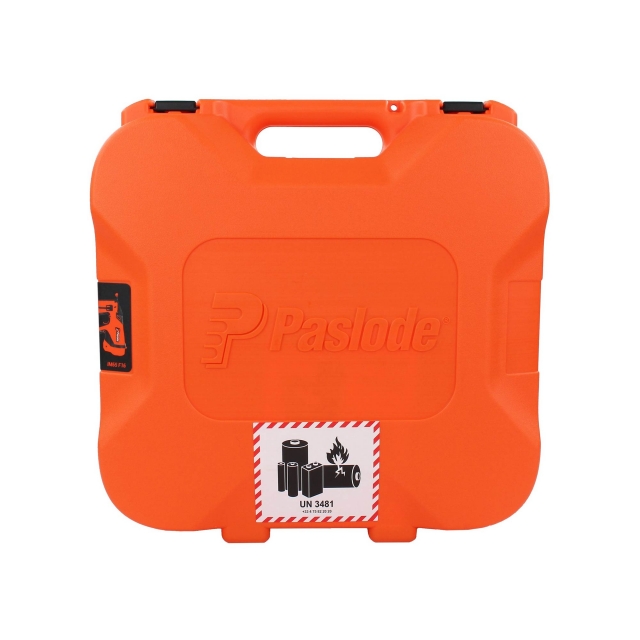
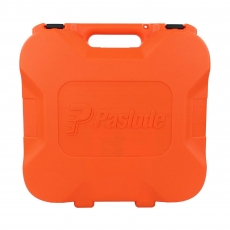
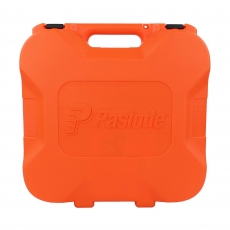
- High-impact lightweight carry case
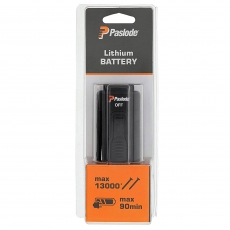
- 1 x 2.1Ah Lithium-ion battery
- Lithium battery charger
- Safety glasses (compliant with EN166:F)
- Hex (Allen) key for maintenance
- Instruction manual
- Number of Batteries Supplied: 1
- Voltage: 7.2v
Product Overview
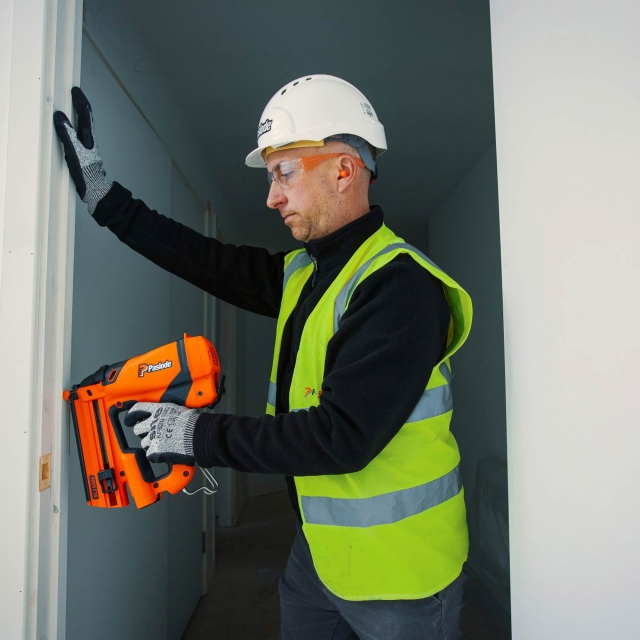
The Paslode IM65 is a high-performance cordless gas finish nailer specifically engineered for second-fix timber applications. This lightweight tool excels in providing a flush finish in a variety of materials, ranging from softwoods to dense MDF. By utilising a combination of a liquid gas fuel cell and a high-capacity lithium battery, it eliminates the need for bulky hoses and compressors, offering unparalleled freedom of movement. Its ergonomic design and refined balance are tailored to reduce fatigue during extended use, particularly when working in confined spaces or overhead. With an impressive firing capacity of up to 10,000 shots per full battery charge, it ensures consistent productivity. The inclusion of a no-mar rubber tip and a clear line of sight allows for pinpoint accuracy, ensuring that decorative timber remains undamaged during the fixing process.
Part No: 916575(PASIM65/F16)
Features & Benefits
- Cordless Convenience: Operates using a combination of gas fuel cells and lithium-ion battery power, removing the trip hazards of trailing cables.
- High Power Output: Delivers 30 Joules of impact energy to ensure nails are driven flush into even the toughest substrates like MDF.
- Enhanced Precision: Features an optimised nose design and a no-mar rubber tip to protect delicate wood surfaces from marking.
- Improved Efficiency: The latest models include a rate-base cooling fan, allowing the tool to perform at higher speeds without overheating.
- Tool-Free Depth Control: An easy-to-use thumbwheel allows for quick adjustments to the nail depth for a perfect finish every time.
- Last-Nail Lockout: Prevents the tool from firing when the magazine is empty, protecting both the internal firing pin and the workpiece.
- Reduced Maintenance: Advanced lubrication and improved technology allow for up to 25,000 shots before a full cleaning is required.
- User Comfort: A rubberised grip handle and lightweight 2.1kg frame make it easy to handle during long renovation sessions.
- Quick Clear Nose: A quick-release front clip provides instant access to the internal mechanism in the unlikely event of a nail jam.
Technical Specification
- Power (Impact Force): 30 J
- Fastener Gauge: F16 (1.6mm wire diameter)
- Fastener Length Range: 16mm to 63mm
- Fastener Type: Straight brads
- Magazine Capacity: 100 nails (2 strips)
- Fixings per Fuel Cell: Approximately 1,000 shots
- Fixings per Battery Charge: Up to 10,000 shots
- Battery Type: 7.4V Li-ion (2.1Ah)
- Battery Charge Time: 90 minutes
- Weight: 2.1 kg (including battery)
- Vibration (EN ISO 8662-11): 2.5 m/s²
- Sound Pressure Level: 90 dB(A)
- Operating Temperature Range: +5°C to +49°C
 Our Expert Says…
 The Paslode IM65 is a compact, quick and precise straight nail gun with Li-ion ignition. It offers clear sight lines and a durable, non-marking nose. It is ideally suited to second fix timber to timber applications and can quick-charge to 80% capacity in 25 minutes. It has a quick-release nose for jam clearance and is supplied with a blow-moulded carry case.
FAQs
Cordless Nail Guns and Staplers are incredibly useful but choosing the right model for you can be tricky. There are lots of options available, both in terms of the tools themselves and the fasteners they use.
The first thing to think about is the power source for your tool. Will it use a battery, in the same way as other power tools, be air-powered via a compressor or utilise gas fuel cells? Historically, battery powered tools have tended to struggle when driving longer length fasteners into hardwoods, but with Makita developing new 40v options, that is changing. Nailers which use Gas Fuel Cells are often capable of working with a larger nail range, but the cells have a specific shelf life and will require replacement.
Another thing to think about is the magazine capacity; the larger the capacity, the more nails you can fire between magazine changes.
The first thing to consider is what you need it to do. There are different kinds of Nailers – first fix machines use larger nails and are designed to add rigidity, to a project. Second fix, or ‘finishing’ Nailers use smaller, more discreet nails for work where a clean finish is required, such as door frames. These can vary in cost, performance and in the type of nail they use. One way to pick the right tool is to consider the work you’ll be doing and the nail size you most use, then pick a nail gun to suit the job, as different types of nailguns will use different nail lengths. For instance, a Brad Nailer, which is a type of finishing Nailgun, will typically use a nail of 15-40mm length, while a Framing Nailer will usually use a nail between 50 and 90mm long.
That depends what sort of projects you’ll be doing and where you need your nails to go. The terms ‘straight’ and ‘angled’ refer to the magazine; an angled tool will enable you to work in corners, or anywhere else you would be working at an angle. They’re great for working in tight spaces and can usually hold longer nails because of the size of their magazines. In addition, they tend to be lighter and easier to store than a straight nailer.
Straight nailers use thinner nails – they can’t go below 16 Gauge – and tend to be heavier more difficult to transport than angled nailers, but are frequently cheaper to buy.
Brushed motors use carbon brushes to transfer power from the fixed part of the motor to the rotor. This creates a reliable and relatively inexpensive motor, but brushed motors do require regular maintenance, in order to either clean the brushes or replace them as they wear out. A brushless motor, by contrast, uses a magnet mounted on the rotor to generate the power and electrical switching to perform the function carried out by the brushes. The additional complexity of the motor’s working means that brushless motors are usually more expensive than brushed.
The voltage of your machine will be partially determined by how it drives nails. For instance, a Paslode Framing Nailer which uses a gas fuel cell to fire each nail might have a battery with only 7.4v, while a Makita XGT Brad Nailer, which is designed to used on jobsites and relies on its battery entirely, is a 40v tool. Consider the work you’ll be doing with your Nailgun or Stapler and how that fits in with the other items in your tool set; this will help you to select the tool which best meets your needs.
Delivery & Returns
Warranty
Related Products
VAT (£330.42 ex VAT)
VAT (£335.91 ex VAT)

VAT (£576.60 ex VAT)
VAT (£697.49 ex VAT)
VAT (£357.51 ex VAT)
VAT (£397.67 ex VAT)
VAT (£391.86 ex VAT)


VAT (£465.12 ex VAT)
VAT (£430.23 ex VAT)

VAT (£6.35 ex VAT)
VAT (£32.39 ex VAT)
VAT (£335.91 ex VAT)