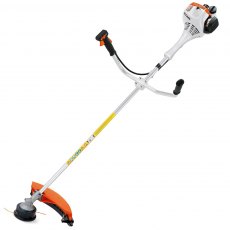
STIHL FS55 Petrol Brushcutter Strimmer

STIHL FS55 Petrol Brushcutter Strimmer
 FREE DELIVERY AVAILABLE*
 Sorry, we are out of stock





Why Not Add

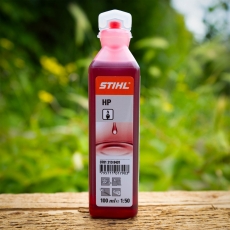
VAT (£1.30 ex VAT)
What’s Included
- Voltage: Petrol
Product Overview
Part No: 41402000523(STIP41402000523)
Features & Benefits
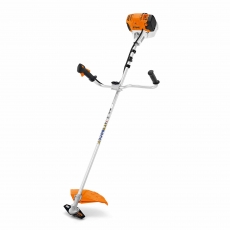
- A low weight, compact brushcutter, with loop handle for difficult terrain and confined conditions.
- It has a functional, modern design with excellent balance and comes with AutoCut line head as standard.
Technical Specification
- CO²: 857 g/kWh
- Displacement: 27.2 cm³
- Performance: 0.75 kW / 1 hp
- Weight: 4.4 kg
- Sound pressure level with plastic tool: 95 dB(A)
- Sound pressure level with metal tool: 94 dB(A)
- Sound power level: 108 dB(A)
- Sound power level with metal tool: 107 dB(A)
- Vibration value, with plastic tool: 8.5 m/s² Left, 8.5 m/s² Right
- Vibration value, with metal tool: 8 m/s² Left, 9 m/s² Right
- Total length: 170 cm
- Cutting diameter: 420 mm
- Tank volume: 0.33 l
- Displacement: 27.2 cm²
- Power output: 0.75/1 kW/bhp
- Weight: 4.9 kg
- Standard cutting tool: AutoCut C 25-2
FAQs
A strimmer or a brushcutter can prove extremely versatile; while they’re ideal for tidying up around the edges of lawns, they can also be used for intensive operations like clearing dense shrub.
When choosing a Strimmer or Brushcutter, there are a number of things to think about. For comfort when using the tool, selecting the right length of shaft for your height is important, as is considering the overall weight of the tool. You may also want to decide whether you want a battery-powered or fuel-driven machine; battery-powered Strimmers don’t need to be refuelled, but can be more powerful than electric models. For home users with relatively small gardens, a corded tool, which you plug into mains power, offers an additional alternative.
Brushed motors use carbon brushes to transfer power from the fixed part of the motor to the rotor. This creates a reliable and relatively inexpensive motor, but brushed motors d require regular maintenance, in order to either clean the brushes or replace them as they wear out. A brushless motor, by contrast, uses a magnet mounted on the rotor to generate the power and electrical switching to perform the function carried out by the brushes. The additional complexity of the motor’s working means that brushless motors are usually more expensive than brushed.
However, eliminating the brushes also eliminates internal friction and maintenance, meaning that brushless motors offer both increased power and a longer working life. Brushless motors also generate less heat and noise and so, on balance, are considered superior to brushed motors.
Delivery & Returns
Warranty
Related Products
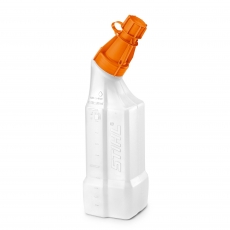
VAT (£4.63 ex VAT)
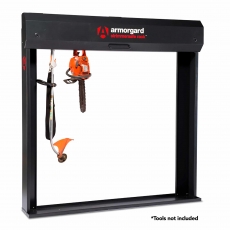

VAT (£1,336.37 ex VAT)

VAT (£617.79 ex VAT)

VAT (£438.82 ex VAT)
VAT (£312.59 ex VAT)


VAT (£389.59 ex VAT)
VAT (£232.05 ex VAT)
VAT (£323.78 ex VAT)
VAT (£289.85 ex VAT)
VAT (£187.74 ex VAT)