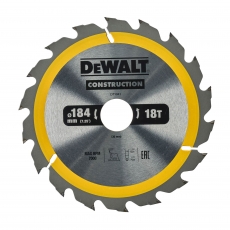
DEWALT DT1941 184x30mm 18T Construction Circular Saw Blade AC
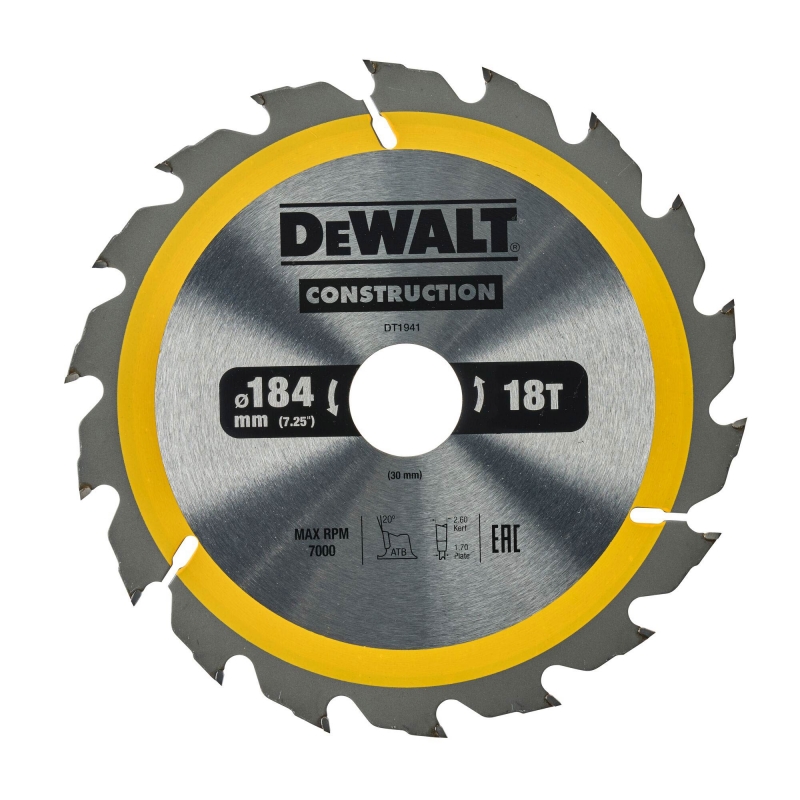
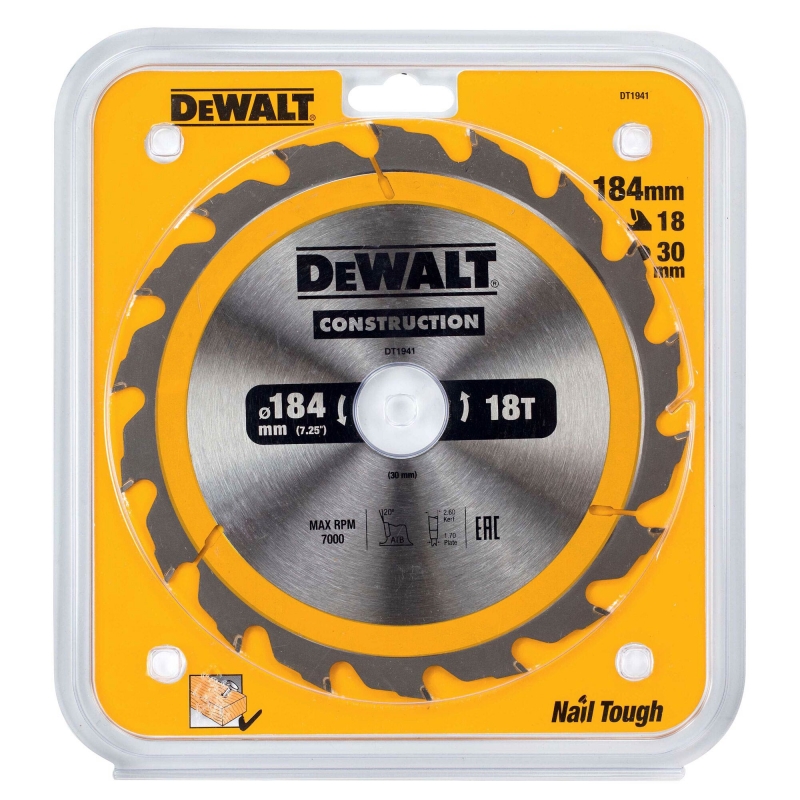
DEWALT DT1941 184x30mm 18T Construction Circular Saw Blade AC
 In stock






Why Not Add
VAT (£0.52 ex VAT)
VAT (£2.50 ex VAT)
VAT (£3.15 ex VAT)
VAT (£5.83 ex VAT)
What’s Included
- 1 x 184mm 18T Construction Circular Saw Blade
- Material: Wood
- Type: Carbide
- Size: 184mm
Product Overview
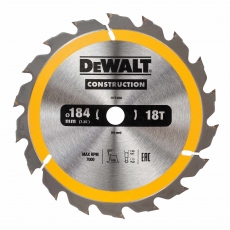
Built to survive the harsh reality of demolition and first-fix construction, the DT1941 circular saw blade prioritises durability and speed over fine finishing. The blade features 18 extra-large carbide teeth that are impact-resistant, capable of cutting through timber embedded with nails or staples without shattering. The low tooth count creates large gullets (spaces between teeth) which eject sawdust and chips rapidly; this design significantly reduces the load on the saw motor and allows for very fast rip cuts along the grain of the wood. The blade plate is laser cut for precision and includes expansion slots that accommodate heat build-up, ensuring the blade remains flat and true even when hot. It is the ideal choice for framing, roofing, and formwork where speed and resilience are critical.
Part No: DT1941-QZ(DT1941)
Features & Benefits
- Impact-resistant carbide teeth can cut through nail-embedded timber.
- Low tooth count allows for rapid rip cutting and efficient debris ejection.
- Laser-cut expansion slots prevent warping due to heat build-up.
- Ultra-thin kerf design reduces power consumption, ideal for cordless saws.
- Designed specifically for construction timber, formwork, and plywood.
Technical Specification
- Blade diameter: 184mm
- Bore size: 30mm
- Tooth count: 18
- Grind geometry: alternate top bevel (atb)
- Hook angle: +20 degrees
- Kerf thickness: 1.65mm (approx)
- Plate thickness: 1.0mm
FAQs
The first thing to check is the blade diameter. Your Circular Saw will be designed to work with blades of a specific diameter if you get the wrong size blade, it will be useless. The same applies to the ‘bore’ which is the hole in the centre of the blade where it becomes fixed to the tool; you’ll need to make sure that the blade bore is a match for your machine.
Then, you should ensure that the blade(s) you’re thinking about buying are suitable for the kind of material you’re cutting. Some are designed specifically for working with wood and others for cutting metal. Then you have ‘all-rounder’ Multi-Material Blades, which can be used with plastics, laminates non-ferrous metals and wood.
The next element to think about is the number of teeth the blade has; this will impact upon the speed of cutting and the quality of the finish.
Delivery & Returns
Warranty
Related Products

VAT (£12.11 ex VAT)
VAT (£13.93 ex VAT)
VAT (£15.75 ex VAT)
VAT (£11.68 ex VAT)

VAT (£18.90 ex VAT)
VAT (£13.15 ex VAT)

VAT (£28.48 ex VAT)

VAT (£21.57 ex VAT)
VAT (£23.14 ex VAT)

VAT (£31.12 ex VAT)
VAT (£18.67 ex VAT)
VAT (£21.58 ex VAT)
VAT (£23.35 ex VAT)
VAT (£33.34 ex VAT)
VAT (£10.65 ex VAT)
VAT (£22.39 ex VAT)