What is an impact driver?
If you spend any time around building work, joinery, roofing or even serious DIY projects, you’ll hear the same thing again and again. Once someone starts using an impact driver, it quickly becomes one of the most used tools in the kit.
At first glance it looks similar to a cordless drill. It’s compact, battery powered and drives screws. The difference becomes obvious the moment you use one under load. An impact driver is built to deliver far more torque than a standard drill, which makes driving long screws and heavy fixings much easier.
This guide explains what an impact driver actually is, how it works and why most tradespeople rely on one every day.
Understanding The Impact Driver
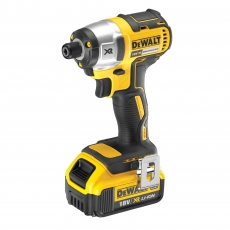
An impact driver is a compact power tool designed primarily for driving screws, bolts and other fixings into tough materials. Unlike a drill, which relies on continuous rotation, an impact driver delivers torque in rapid bursts using an internal impact mechanism.
That impact mechanism is what sets it apart.
When you begin driving a screw, the tool behaves much like a drill driver. As resistance increases, the internal hammer and anvil mechanism engages. Instead of simply pushing harder, the tool delivers rapid rotational strokes that help drive the fixing forward.
This means:
- Much higher torque than a standard drill
- Less chance of the drill bit slipping out of the screw head
- Less effort required from the user
This is why impact drivers are so effective when working with long screws, structural fixings and dense timber.
How The Impact Mechanism Works
Inside an impact driver is a spring loaded hammer and anvil system. When resistance builds up while driving a fixing, the spring compresses. Once enough tension is reached, the hammer strikes the anvil and delivers a short rotational impact.
This happens extremely quickly, often thousands of times per minute.
Rather than applying force like a drill, the tool delivers bursts of torque. Each impact helps turn the screw further without forcing the motor to do all the work.
This design has a few clear advantages on site.
Firstly, it makes driving long screws significantly easier. The tool does most of the work.
Secondly, it reduces cam out, which is when the bit slips out of the screw head. Anyone who has tried driving large screws into hardwood with a drill will recognise how frustrating that can be.
Thirdly, it reduces strain on your wrist. Because the torque is delivered in controlled bursts, the tool is far less likely to twist violently in your hand when a screw bites.
What Is An Impact Driver Used For?
Impact drivers are used wherever strong, reliable fastening is required. On most sites they’re used far more for driving fixings than drilling holes.
![]()
-
Driving Long Wood Screws
Decking, fencing, timber framing and studwork all involve driving long screws into timber. An impact driver can sink these fasteners quickly without the stalling you often get with a drill.
![]()
-
Structural Fixings
Coach screws, lag bolts and heavy duty timber fixings all require high torque. Impact drivers make these jobs far easier and more controlled.
![]()
-
Repetitive Screwdriving
For joiners, kitchen fitters and shopfitters, screwdriving tasks can make up a large part of the day. Using an impact driver reduces effort and speeds up repetitive work.
![]()
-
Driving self-tapping screws into metal
Impact drivers are commonly used for driving self tapping screws into steel or aluminium. HVAC installers and metal fabricators often rely on them for this type of work.
![]()
-
Working in tight spaces
Because impact drivers are compact and don’t require as much downward pressure, they’re easier to use overhead or in awkward positions.
Impact Driver Vs Drill
One of the most common questions people ask is whether an impact driver replaces a drill.
The short answer is no. They do different jobs.
A drill driver is designed for drilling holes and light fastening. It provides steady rotational power and allows precise control when drilling wood, metal or plastic.
An impact driver is designed specifically for driving screws and fixing under load. In practice, most tradespeople use both tools.
A typical workflow might look like this:
- Use a combi drill to drill pilot holes
- Switch to an impact driver to drive the screws
This approach gives you the best of both tools. The drill handles drilling tasks and lighter fastening, while the impact driver handles heavy duty screwdriving.
Trying to do everything with a single drill often leads to slower work and more strain on the tool.
When Not To Use An Impact Driver
Impact drivers are powerful, but they’re not the right tool for every job.
There are a few situations where a drill driver is the better choice.
Drilling Holes
Impact drivers can technically use hex shank drill bits, but they’re not ideal for drilling precise holes. A standard drill gives much better control.
Small Or Delicate Fixings
The high torque of an impact driver can easily snap smaller screws or damage delicate fittings.
Precision Work
For fine joinery or cabinet installation, a drill driver with adjustable clutch settings is usually more suitable.
Impact drivers are best used when you need power and speed for driving fixings rather than delicate control.
Why Tradespeople Use Impact Drivers
Once someone starts using an impact driver regularly, it usually becomes one of their main tools.
This is because:
- They are extremely efficient for fastening tasks. Driving screws becomes quicker and requires far less effort.
- They are compact and easy to handle. This makes them useful in tight spaces or overhead work.
- They reduce fatigue. This is because the tool handles the torque, the user doesn’t have to fight against the resistance of the fixing.
For builders, joiners, roofers and electricians, this combination of power and control makes a big difference over the course of a long working day.
Do You Need An Impact Driver?
If most of your work involves drilling holes, a combi drill may be all you need. If your projects involve driving a lot of screws, especially longer ones, an impact driver can make the job significantly easier.
This is why most professionals carry both.
The drill handles drilling and lighter fastening. The impact driver handles the heavy screwdriving work where torque matters most.
For anyone regularly working with timber, structural fixings or metal screws, an impact driver quickly proves its value.
Impact Drivers From Toolstore
At Toolstore UK, we supply a wide range of professional impact drivers and power tools from trusted brands such as Makita and DeWalt. These tools are designed for trade use and built to deliver the torque and reliability needed on busy sites.
If you’re looking to add an impact driver to your kit, our team can help you choose the right model for your work.
All orders over £55 qualify for free UK delivery and next day delivery is available when you order before 4pm.
If you would like advice before buying, call our team on 03330 043777 or fill in our online contact form and we’ll be happy to help.
- 23rd March 2026



Recently Viewed






Secure online payments via